

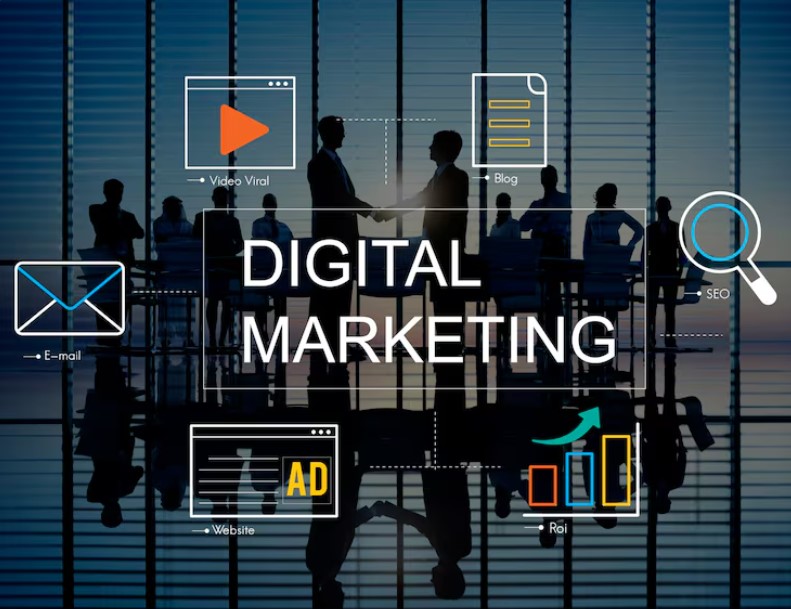
If you’ve ever tried to “do marketing properly,” you already know the problem: there are too many channels, too many tactics, and too many opinions. SEO experts argue with PPC specialists. Social teams push for more content. PR wants brand storytelling. And the business owner just wants one simple thing—consistent growth.
This is where a digital marketing agency can make a genuine difference, not because agencies have secret hacks, but because good agencies bring structure, clarity, and strategy to what is otherwise a chaotic space.
This article breaks down what a modern agency really does, how it connects the dots across channels, and what you should understand before choosing one—without the sales talk.
Digital marketing is no longer “pick one channel and win”
A decade ago, you could build a strong business by focusing on one thing:
- Ranking on Google for a few profitable keywords
- Running Facebook ads with a solid offer
- Posting regularly on social media and growing organically
- Getting press mentions that boosted brand credibility
Today, it’s more complicated. Most industries are saturated. Costs per click are higher. SEO is more competitive. Attention spans are shorter. And customers rarely convert after one touchpoint.
Instead, marketing works more like a system.
A buyer might:
- Discover your brand through a Google search
- Check reviews and your website
- See your retargeting ad later
- Follow your social page
- Read a blog post
- Finally enquire or buy days/weeks later
That’s why growth now depends on building a connected journey—not isolated tactics.
What a good agency actually does: reduce uncertainty
Most businesses don’t struggle because they lack ideas. They struggle because they don’t know:
- which channel will move the needle fastest
- what to prioritise this quarter
- what to stop doing
- how to measure what’s working
- how to scale without wasting budget
A good agency reduces uncertainty by doing three things consistently:
1) Turning data into decisions
Not just collecting analytics dashboards, but interpreting them:
- Where are leads coming from?
- Which pages or campaigns convert best?
- Which audiences have the highest lifetime value?
- What content attracts high-intent visitors?
Data is only useful when it changes decisions.
2) Connecting channels instead of competing for credit
Marketing channels don’t operate in silos.
For example:
- SEO content can improve PPC landing page performance
- Digital PR can earn backlinks that improve SEO rankings
- Social content can be repurposed into blog content
- Paid ads can validate which messaging works before scaling SEO
An agency with a joined-up approach avoids the classic problem: every channel looks busy, but revenue stays flat.
3) Building repeatable processes
The goal isn’t just a few “good months.” It’s building a system that continues to generate demand.
That means:
- structured keyword and content planning
- ongoing optimisation of conversion paths
- consistent testing and iteration
- scalable reporting and insights
SEO: the long game that still wins (when done properly)
SEO has changed dramatically. It’s not just “write content + add keywords.”
Modern SEO includes:
Search intent (the real ranking factor)
Google isn’t ranking pages because they have keywords. It ranks pages because they satisfy the search intent.
Example:
- If someone searches “best accounting software,” they want comparisons.
- If someone searches “accounting software pricing,” they want cost breakdowns.
- If someone searches “accounting software for startups,” they want tailored recommendations.
An agency should be able to map keywords to intent and build content around real user needs.
Authority building
Even great content struggles if the site lacks authority.
That’s why Digital PR and link acquisition matters—because rankings are often influenced by:
- quality backlinks
- topical relevance
- brand mentions across the web
Technical health
SEO is also affected by:
- site speed
- crawlability
- indexing issues
- mobile performance
- internal linking structure
A good SEO strategy blends content + authority + technical fundamentals.
PPC: faster results, but only when managed with discipline
Paid advertising can be one of the quickest ways to generate demand, but it’s also the quickest way to waste budget if not controlled.
The biggest PPC mistakes businesses make:
- sending traffic to weak landing pages
- optimising only for clicks instead of conversion quality
- running broad targeting with generic messaging
- not tracking properly (or tracking the wrong events)
A strong agency PPC approach usually looks like:
- clear conversion tracking and attribution setup
- campaign structure aligned to intent (cold vs warm audiences)
- constant testing (copy, creatives, landing pages)
- optimisation based on profitability, not vanity ROAS
In short: PPC should behave like an investment, not a gamble.
Social media: not just “posting,” but positioning
Social media is misunderstood because most people evaluate it incorrectly.
The wrong way to judge social:
- likes, comments, followers
The right way:
- trust built over time
- clarity of positioning
- repeat visibility to the right audience
- support for conversion later
For many businesses, social works best when it becomes a proof engine:
- showing expertise
- demonstrating results
- educating the market
- building familiarity
A good agency will help create a content strategy that fits:
- your market maturity
- your audience type (B2B vs B2C)
- your internal resources
- your brand voice
Digital PR: the underrated channel for authority and trust
Digital PR isn’t just “getting featured.” It’s a strategic tool that impacts:
- SEO authority (through quality links)
- brand credibility
- conversion rates (people trust known brands more)
- partnership opportunities
It works best when the PR is:
- data-led (surveys, insights, reports)
- story-driven (not generic press releases)
- placed in relevant publications
A business with strong PR often finds that:
- SEO becomes easier
- PPC performs better
- sales conversations become smoother
Because credibility lowers resistance.
The “AI advantage” is not what people think it is
AI has changed marketing, but not in the way most people assume.
AI doesn’t replace strategy. It replaces inefficiency.
Where AI helps most:
- analysing large datasets faster
- spotting patterns humans miss
- predicting performance trends
- improving targeting and segmentation
- generating hypotheses for testing
But AI is only useful when paired with:
- clean data
- human judgement
- experience-driven strategy
The real advantage is speed: faster insights, faster iteration, faster optimisation.
What to look for when choosing an agency (practically)
Here are practical signs you’re dealing with a good agency:
They ask business questions, not just marketing questions
If they don’t ask about:
- margins
- customer lifetime value
- capacity
- sales process
- customer journey
…they may optimise campaigns without understanding what success looks like.
They prioritise clarity over complexity
A good agency can explain strategy simply:
- what we’re doing
- why we’re doing it
- what success looks like
- what happens next
If everything sounds complicated, it usually means it isn’t well thought out.
They focus on sustainable growth
The best agencies don’t just chase short-term wins.
They build a growth system that compounds.
The real value: turning demand into results
Marketing isn’t about being everywhere.
It’s about being in the right places, with the right message, at the right time.
The best agencies operate like growth partners:
- they simplify decision-making
- they reduce wasted effort
- they create a repeatable pipeline
- they help you scale confidently
18 Comments
Pingback: lasix furosemide 40 mg
Pingback: vardenafil
Pingback: augmentin 875
Pingback: flagyl for dogs
Pingback: cenforce 200mg india
Pingback: xenical near me
Pingback: priligy kaufen amazon
Pingback: minoxidil ftm results
Pingback: semaglutid tabletter uten resept
Pingback: doxycycline capsules dosage
Pingback: tadalafil bodybuilding reddit
Pingback: liraglutide joint pain
Pingback: toradol pain treatment
Pingback: ivermectin research FAQ
Pingback: vardenafil severe organ impairment
Pingback: Fed-State Sildenafil Onset
Pingback: Onset Optimization: Sildenafil vs Levitra
Pingback: tadalafil bioequivalence standards